
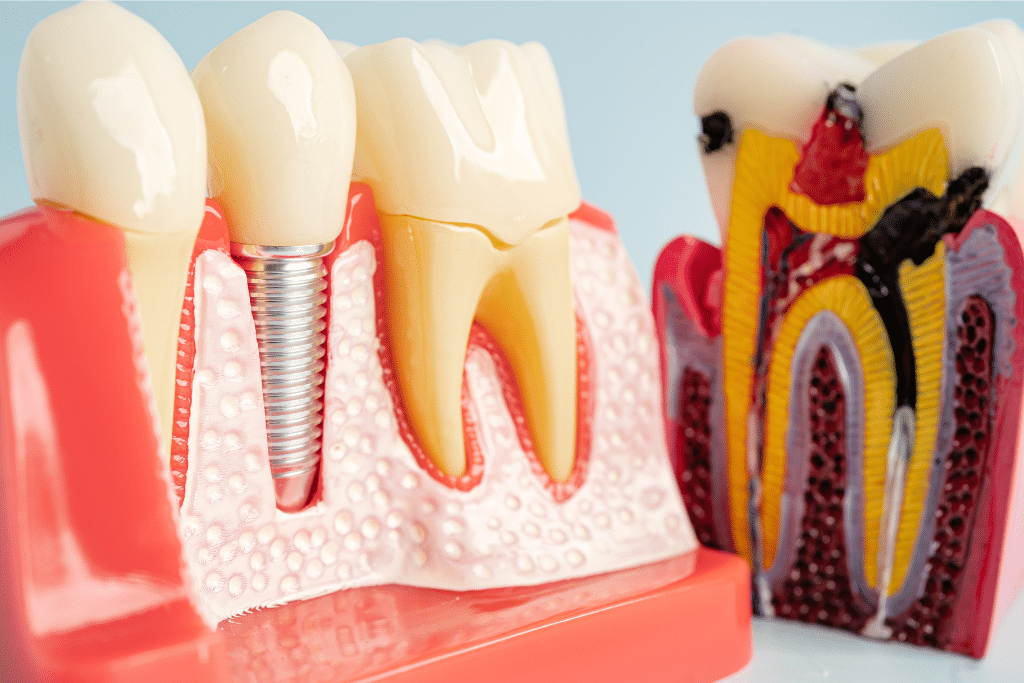
Most people think losing a tooth is the hard part. It’s not. The hard part is what happens after quietly, beneath the surface while life gets busy and the gap gets easier to ignore.
If you’ve been putting off dental implants after an extraction, you’re not alone. Patients across the Tri-Valley deal with this every day. From single-tooth replacements to all on 4 dental implants in Livermore, the solutions exist but they work best when you don’t wait too long. Because here’s what nobody tells you upfront: your jaw doesn’t wait. The moment a tooth is gone, the clock starts ticking and the longer you delay, the more complicated and costly your path back becomes.
Here’s exactly what that timeline looks like.
Month 1: Your Jawbone Starts Shrinking – Right Now
This one surprises nearly everyone. Your jawbone stays dense and strong because tooth roots constantly stimulate it. Remove the root, and your body reads the gap as “bone no longer needed here” and begins resorbing, essentially dissolving the bone tissue to redistribute calcium elsewhere.
By the end of the first month, measurable bone loss has already occurred. You feel nothing. You see nothing. But it’s happening, and it matters enormously for your implant options later.
The takeaway? The conversation about replacing a tooth should start at the same time as the conversation about removing one not months down the road.
Months 2–6: Your Other Teeth Start Moving
A missing tooth doesn’t just affect the empty space it sets off a chain reaction in your entire mouth. Here’s what’s happening while you wait:
- Neighboring teeth drift toward the gap, slowly shifting out of alignment.
- The opposing tooth over-erupts, growing into the open space because it has nothing to bite against.
- Your bite changes, putting uneven pressure on your jaw joint which can lead to TMJ discomfort, headaches, and difficulty chewing.
For active Livermore residents whether you’re cycling the Iron Horse Trail on weekends or grinding your teeth through a long Bay Area commute this kind of misalignment tends to compound faster. And by the end of month six, bone loss has often reached around 25%, which may already require a bone graft before any implant can be placed.
6 Months to 1 Year: Simple Cases Get Complicated
This is the window where patients most often walk in and hear something unexpected. What could have been a clean, single-implant procedure now involves a bone graft, a longer treatment timeline, and a noticeably higher bill.
It’s also when patients who’ve lost multiple teeth or who’ve been wearing loose, uncomfortable dentures start seriously looking at all on 4 dental implants in Livermore as a permanent, full-arch solution. All-on-4 is engineered for exactly this situation: it uses four strategically angled implants to maximize stability even when bone volume has already decreased. That’s what makes it such a powerful option for patients who didn’t act sooner.
Still treatable? Absolutely. But more involved than it had to be.
1 Year and Beyond: It Shows on Your Face
After a full year without a tooth root, bone loss is significant enough to begin changing the shape of your face. The area around your lips and cheeks may look slightly sunken. Patients often say they look older than they feel and they’re right, because they are losing facial volume.
For those who’ve been in traditional dentures for years and are now ready for something permanent, this is usually the wake-up call. The good news: modern techniques including all on 4 dental implants in Livermore don’t just replace your teeth. They restore the bone stimulation that preserves your facial structure, giving you back the profile that long-term tooth loss quietly takes away.
What You Should Know Before You Wait Another Month
Two things that consistently catch patients off guard and that are worth knowing right now:
- Bone loss is faster than most people expect. An extraction site can lose up to 50% of its width in the first year alone. That’s not the worst case, it’s standard biology. And it directly narrows your implant options the longer you wait.
- Implants placed in healthier bones perform better long-term. Earlier placement means denser bone, better integration, and higher success rates. Waiting doesn’t just add procedures it can affect the quality of your final result.
Stop Waiting. Your Jaw Isn’t.
Whether you lost a tooth recently or you’ve been living with gaps and dentures for years, there’s a path forward and it starts with one conversation.
At Roots & Gums of the Tri Valley in Livermore, we help patients across the Tri-Valley Livermore, Pleasanton, Dublin, and beyond find practical, lasting solutions for tooth loss that fit their real life: their schedule and their goals.
Don’t let another month of bone loss make the decision harder than it needs to be.
Book your consultation at Roots & Gums of the Tri Valley
Frequently Asked Questions
Q: How Soon After Extraction Can I Get An Implant?
Often the same day or within weeks. Many patients qualify for immediate placement your dentist will confirm based on bone health at the site.
Q: Can I Still Get Implants If I’ve Already Waited A Long Time?
Yes. A bone graft can rebuild lost volume and get you back on track. It adds some healing time, but it works well.
Q: What’s The Difference Between All-On-4 And Regular Implants?
All-on-4 replaces an entire arch using just four implants angled for maximum stability, even with reduced bone. It’s a faster, more affordable path to a permanent full-arch smile.
Q: What Happens To Neighboring Teeth If I Leave The Gap Too Long?
They start to shift and drift into the empty space. Over time, this throws off your bite, creates alignment issues, and can make implant placement more complex than it ever needed to be.
Q: How Do I Know If I’m A Candidate For All-On-4?
A quick consultation and X-ray is all it takes. Even patients with significant bone loss are often good candidates that’s exactly what All-on-4 is designed for.