
If you’re dealing with a tooth that hurts again after a root canal, you’re probably facing a tough choice: try to save the tooth or just have it pulled. It’s a common worry across the Tri-Valley, and one we hear almost every week in our Livermore office. The good news is that you usually have more than one option, and the right one depends on your specific tooth, not on what’s fastest or cheapest.
Expert endodontic care exists precisely for moments like this, when a tooth that once seemed fine starts causing pain, swelling, or sensitivity months or years after treatment. If you’re searching for an endodontist near me in Livermore, it’s worth knowing that retreatment can often save a tooth that appears to be failing. Before you assume extraction is your only path forward, take time to understand what retreatment actually involves, when it works well, and when pulling the tooth genuinely is the smarter long-term choice.
What Is Endodontic Retreatment?
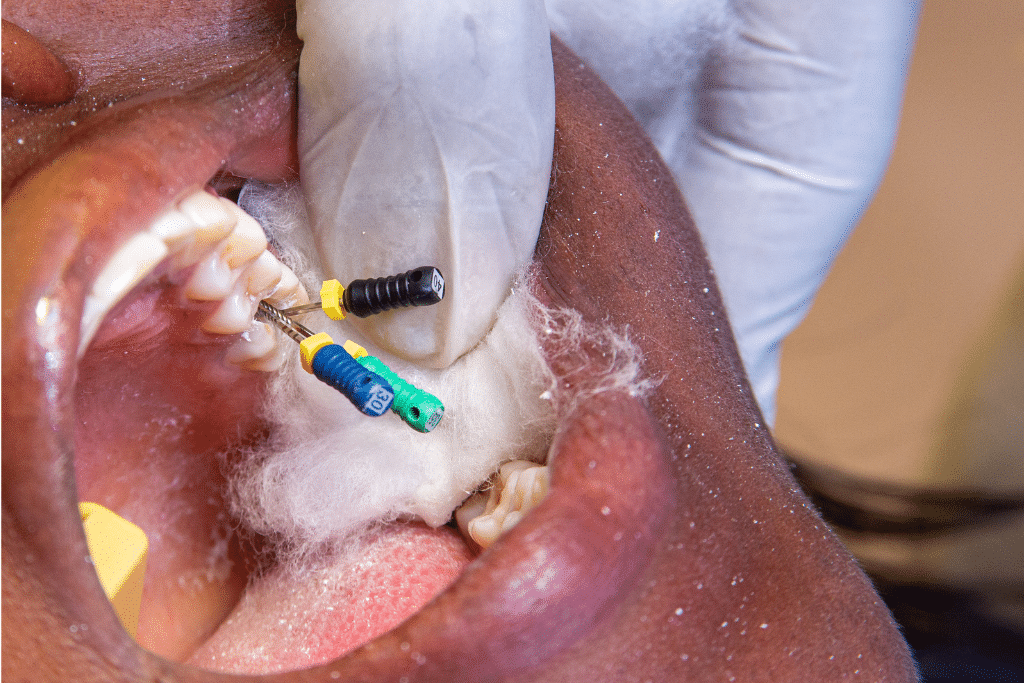
Retreatment is essentially a second attempt at saving a tooth that already had a root canal. Over time, new decay can develop under an old crown, a canal can go undetected during the first procedure, or a restoration can crack and let bacteria back in. During retreatment, the old filling material inside the tooth is removed, the canals are cleaned and disinfected again, and the tooth is resealed with fresh material.
This isn’t a routine fix-it-and-forget-it visit. It requires precision, magnification, and often a cone-beam CT scan to spot canals or fractures a regular X-ray might miss. That level of detail is exactly why patients searching for an endodontist near me in Livermore usually end up in a specialist’s chair rather than a general dentist’s.
When Retreatment Makes More Sense Than Extraction
There are several situations where saving the natural tooth is clearly the better long-term investment.
- The tooth structure is still strong, with enough healthy tissue to support a crown afterward.
- The surrounding bone shows no serious loss on imaging, meaning the infection hasn’t spread far.
- The original root canal likely failed due to a missed canal, leaking crown, or new decay rather than a cracked root.
- You want to avoid the cost and time involved in an implant or bridge down the line.
Keeping your natural tooth also keeps your bite aligned and your jawbone stimulated, which matters more than people realize. Once a tooth is gone, neighboring teeth can shift, and the bone underneath the gap can start to shrink within months. Retreatment sidesteps all of that by preserving what nature gave you.
When Extraction Is the Better Call
Retreatment isn’t always realistic. A tooth may need to come out when there’s a vertical root fracture, since a cracked root simply can’t be resealed, no matter how skilled the endodontist. Severe bone loss, a tooth already retreated once without success, or decay that’s destroyed too much of the crown are also strong signs that extraction, followed by an implant or bridge, is the more predictable path.
This is exactly why an honest evaluation matters so much. A trustworthy endodontist near me in Livermore will walk you through the actual imaging and prognosis rather than pushing you toward whichever treatment is more profitable. Sometimes saving the tooth costs more in the long run than simply replacing it, and a good specialist will tell you that plainly.
Why Livermore Patients Often Need a Specialist’s Opinion
Livermore has grown quickly over the past decade, from the wine country tasting rooms along Tesla Road to the busy shopping strip near the Premium Outlets, and many families here have stayed with the same general dentist for years. That’s fine for routine care, but complex retreatment cases benefit from someone who focuses on endodontics day in and day out.
We often see patients commuting in from Sunol, Pleasanton, and Dublin for a second opinion after a root canal that never quite settled down. Nobody wants to make that I-580 drive twice for treatment that doesn’t hold. Getting the diagnosis right the first time saves you the trip, the pain, and the added expense.
If you’ve been putting off a decision because you’re not sure who to trust with a second opinion, searching for an endodontist near me in Livermore is a reasonable place to start, especially if your case involves a tooth that was already treated once and is acting up again.
What to Expect During a Consultation
A proper evaluation starts with a review of your dental history and symptoms, followed by imaging that shows the tooth’s internal structure and the bone around it. From there, your endodontist should explain whether the tooth is a good retreatment candidate or whether extraction and replacement will serve you better long term. You should leave understanding the reasoning, not just the recommendation.
Making the Right Choice for Your Tooth
There’s no universal answer to whether retreatment or extraction is better. It depends on the crack pattern, the bone, the restoration above the gumline, and your own priorities around cost, time, and keeping your natural teeth. What matters most is getting an accurate diagnosis from someone with the training to read the subtle signs that a general dentist might not catch.
If a tooth is giving you trouble and you’re unsure which direction to take, don’t wait for the pain to make the decision for you. The team at Roots & Gums of the Tri Valley is here to give you a clear, honest evaluation and help you choose the path that protects your smile and your health. Call us today to schedule your appointment and take the first step toward lasting relief.
Frequently Asked Questions
How do I know if my old root canal has failed?
Common signs include lingering pain when biting down, swelling near the gumline, a small pimple-like bump on the gum, or sensitivity that returns months or years after the original treatment. Any of these warrants an evaluation.
Is endodontic retreatment painful?
Most patients describe it as similar to a routine root canal. Local anesthesia keeps you comfortable during the procedure, and any soreness afterward is usually manageable with over-the-counter pain relief.
How much does retreatment typically cost compared to extraction and an implant?
Retreatment is often less expensive upfront than extraction followed by an implant or bridge, though the right choice depends on the tooth’s prognosis rather than cost alone.
Can every tooth be retreated?
No. Teeth with vertical root fractures, severe bone loss, or extensive structural damage are usually better candidates for extraction and replacement.
How soon should I see a specialist after noticing symptoms?
As soon as possible. Infections don’t resolve on their own, and waiting can reduce the odds that the tooth is still salvageable.