
Receding gums can compromise the health and visual appeal of your smile. As gum tissue pulls away from teeth, roots become exposed, leading to sensitivity, discomfort, and an aging appearance. Gum grafting is a reliable procedure for restoring lost gum tissue, enhancing your smile, and improving oral health.
Understanding Receding Gums
Gum recession is a common dental issue when gum tissue gradually recedes from the tooth. This is often due to periodontal disease, aggressive brushing, genetics, or trauma. Gum recession affects aesthetics and increases the risk of decay and sensitivity, as exposed roots are more vulnerable to bacteria and wear.
What Is Gum Grafting?
Gum grafting is a surgical procedure where healthy gum tissue from another area of your mouth is transferred to the receded area. Types of grafts include:
- Connective Tissue Grafts: Tissue taken from under the palate’s surface and placed over the receded area.
- Free Gingival Grafts: Tissue wholly removed from the palate and attached to the receded area.
- Pedicle Grafts: Tissue partially cut near the receded area and pulled over to cover the exposed root.
The appropriate type is selected based on the extent of the recession and individual needs.
How Does Gum Grafting Restore Your Smile?
- Aesthetic Improvement: Gum grafting restores natural gum contours, covering exposed roots and creating an even gum line. This enhances the overall appearance and provides a more youthful look.
- Reduced Sensitivity: Exposed roots cause tooth sensitivity, making eating uncomfortable. Gum grafting covers these areas, reducing discomfort.
- Enhanced Oral Health: The added gum tissue protects teeth, reducing the risk of decay on exposed roots and preventing further recession. This reinforces tooth support and maintains periodontal health.
- Long-Term Stability: Restoring gum tissue stabilizes mouth structure, preventing teeth from shifting or loosening and ensuring long-term dental health.
The Procedure and Recovery
Gum grafting involves:
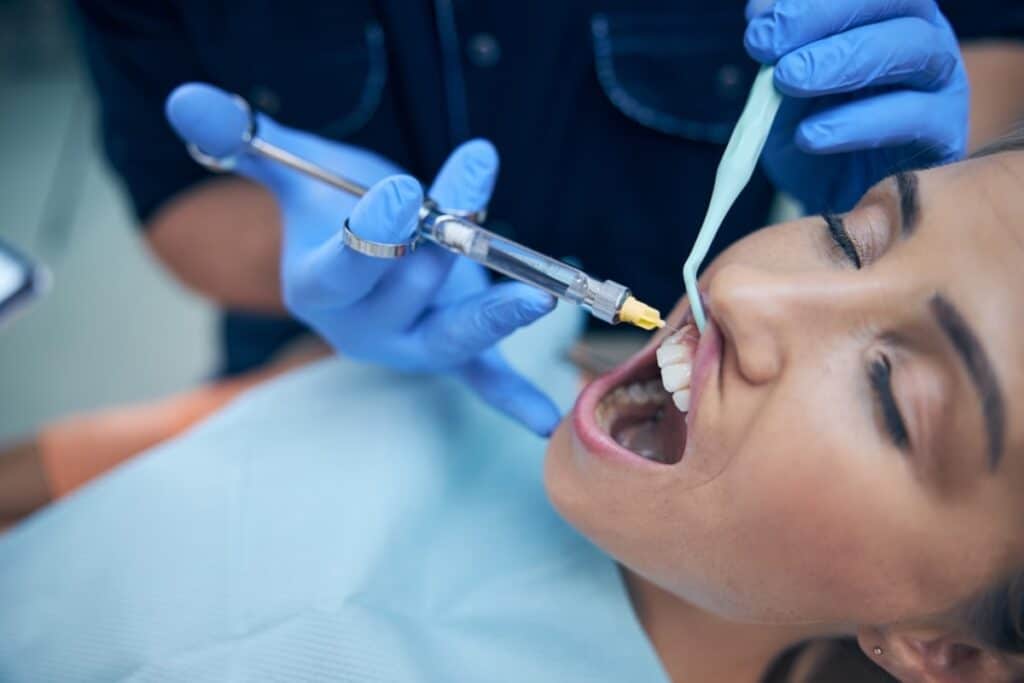
- Preparation: Cleaning and numbing the area.
- Tissue Harvesting: Taking healthy tissue from the donor site.
- Graft Placement: Place the tissue over the receded area by placing it and suturing it.
- Healing: Initial healing in 1-2 weeks, full recovery over months.
Post-operative care is vital, including gentle brushing, avoiding strenuous activity, and following the dentist’s ins.
Conclusion
Gum grafting effectively restores smiles after gum recession, enhancing aesthetics, reducing sensitivity, and improving oral health. It offers a long-term solution for a confident, youthful smile. If you have receding gums, consult a dental professional to see if gum grafting is right for you. Your journey to a restored smile begins with a consultation.
Schedule an appointment with a dentist at Roots & Gums of The Tri-Valley care provider to learn how gum grafting can transform your smile.